Magnalite Identification & Dating Guide
The complete guide to identifying authentic vintage Magnalite cookware. Learn to spot Wagner Ware markings, GHC stamps, date your pieces accurately, and distinguish USA-made treasures from Chinese reproductions.
The Magnalite Manufacturing Timeline
Understanding the manufacturer history is crucial for identifying and dating your Magnalite cookware. Each era has distinct characteristics, markings, and quality levels that affect both authenticity and value.
Wagner Ware Era
The Holy Grail Period
The original and most sought-after era. Wagner Manufacturing Company of Sidney, Ohio created Magnalite as premium cast aluminum cookware using their expertise from cast iron production.
Identifying Marks:
- "SIDNEY -O-" stamp (most valuable, rare on early pieces)
- "Wagner Ware" or "Wagner Mfg. Co. Sidney, Ohio"
- Patent numbers visible on lid or base
- Heavy, thick-walled castings with exceptional smoothness
- Solid, integrated handles (not riveted)
Collector Value: Highest
Wagner Ware pieces command premium prices, especially with the Sidney -O- stamp. Expect to pay 2-4x more than later eras for equivalent condition.
Textron Era
Transition Period
Textron acquired Wagner and continued production with similar quality standards. These pieces are still USA-made and excellent quality, though less coveted by collectors than original Wagner.
Identifying Marks:
- "Wagner Ware - Magnalite" with Textron branding
- Still marked "Sidney, Ohio" or "Made in USA"
- Quality remains comparable to Wagner era
- Heavy gauge aluminum, smooth casting
Collector Value: High
Textron-era pieces are excellent quality and desirable, typically 60-80% of Wagner Ware prices.
GHC Era
Longest Production Run
General Housewares Corporation (GHC) acquired the Magnalite brand and produced it for nearly three decades. Quality remained solid, and these are the most commonly found vintage pieces today.
Identifying Marks:
- "GHC" or "General Housewares Corp" stamp
- "Magnalite" prominent on pieces
- Still USA-made through most of this period
- Good quality castings, though slightly lighter than Wagner era
- Introduction of Professional line (anodized) in later years
Collector Value: Moderate
GHC pieces are excellent for daily use and good value. Typically 40-60% of Wagner Ware prices. Most available vintage Magnalite falls into this era.
American Culinary Era
Later Production
American Culinary Corporation acquired the brand. Quality varied during this period, with some production moving overseas. Later pieces may be Chinese-made.
Identifying Marks:
- "American Culinary" or "AC" marking
- Check for country of origin - USA vs China
- Variable quality - inspect carefully
Collector Value: Lower
USA-made pieces from this era have moderate value; Chinese-made pieces have minimal collector value but can still be functional.
Modern Era
Current Production
Various companies now produce cookware under similar names. Authentic new Magnalite is rare; many similar products are Chinese imports under derivative names (McWare, Magnaware, etc.).
What to Look For:
- "Made in China" marking (not collectible vintage)
- Lighter weight than vintage pieces
- Rough or uneven castings
- Names like "McWare" or "Magnaware" (not authentic Magnalite)
Collector Value: Minimal
Modern imports have little to no collector value. Buy for use only, not investment or collecting.
Logo & Stamp Dictionary
Visual guide to identifying authentic Magnalite markings. These stamps and logos are your key to determining age, authenticity, and value.
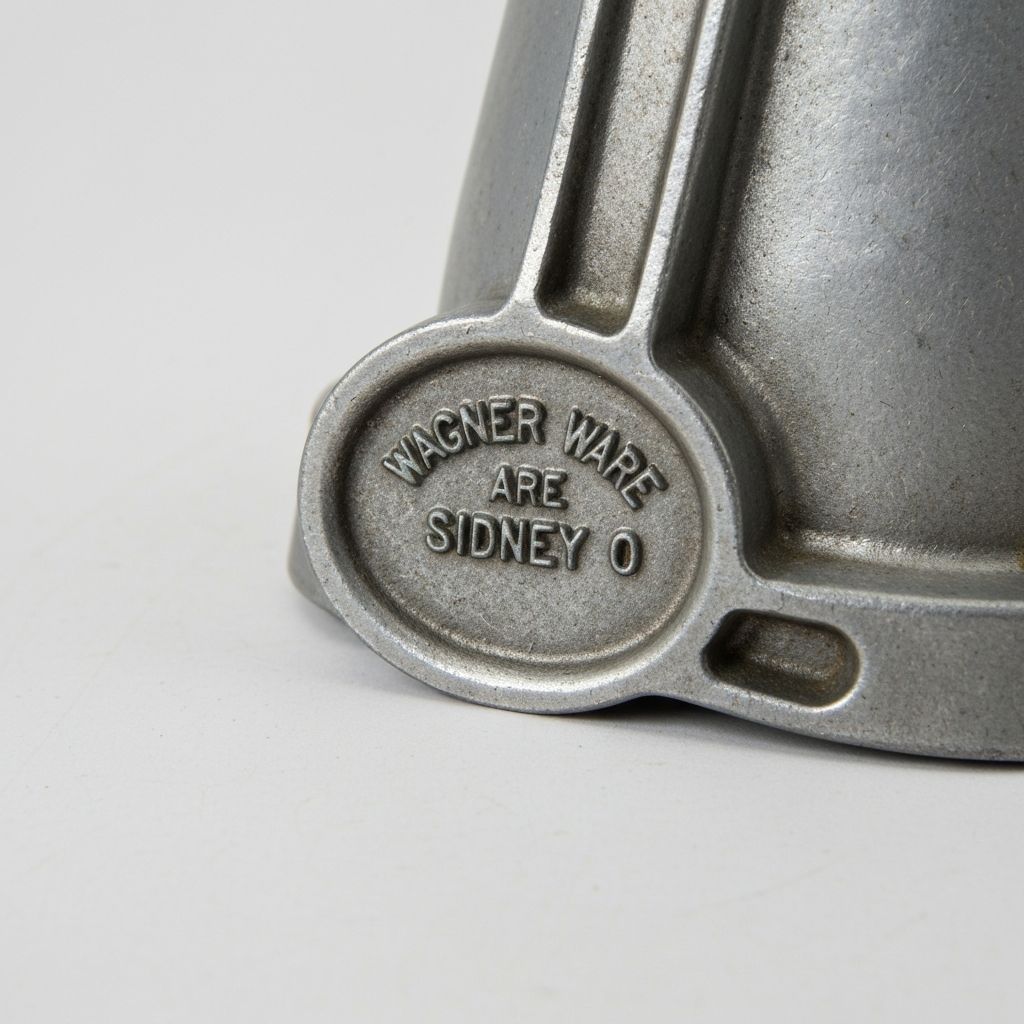
SIDNEY -O- Stamp
The most desirable marking on Magnalite cookware. Found on Wagner Manufacturing pieces from Sidney, Ohio. The "-O-" represents Ohio. This stamp significantly increases value and authenticity.
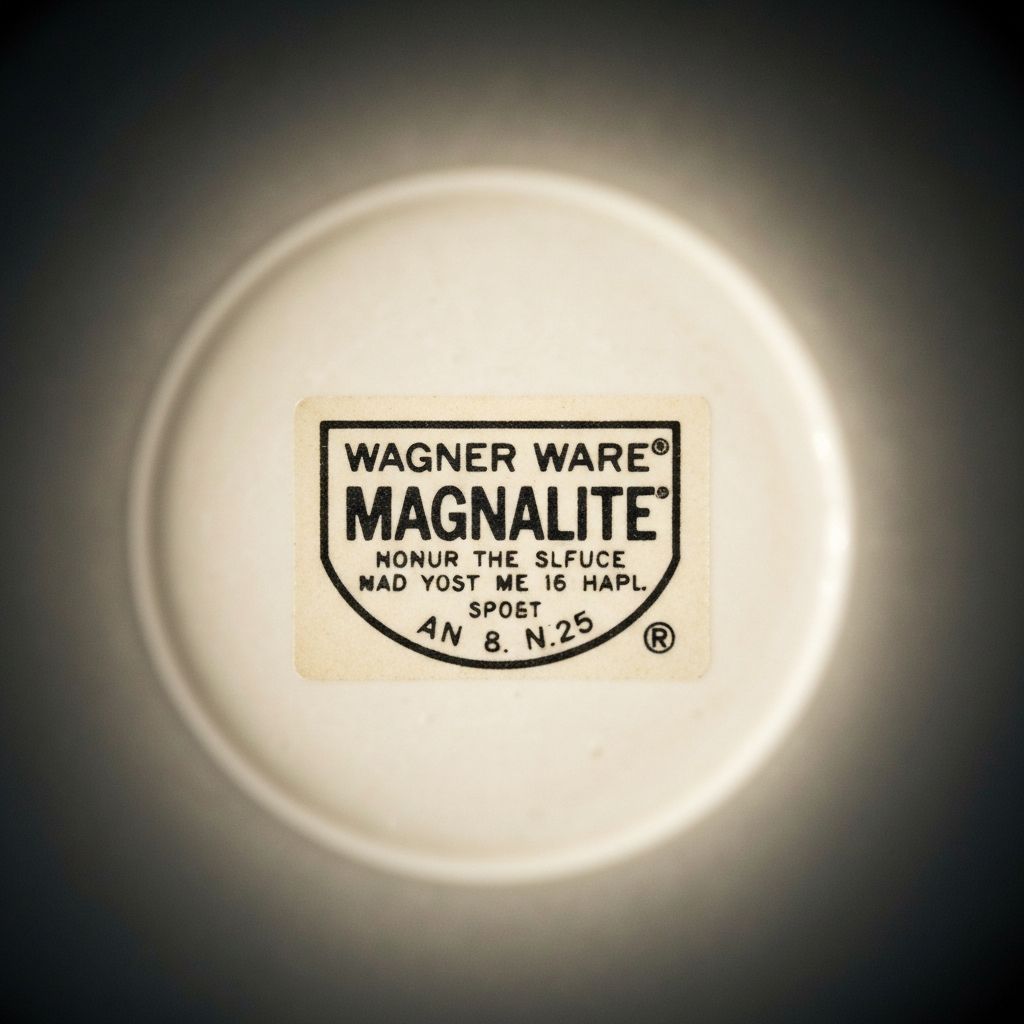
Wagner Ware Marking
Standard marking for Wagner Manufacturing era Magnalite. Often includes "Wagner Mfg. Co." with "Sidney, Ohio" and patent numbers. These are authentic vintage pieces with excellent quality.
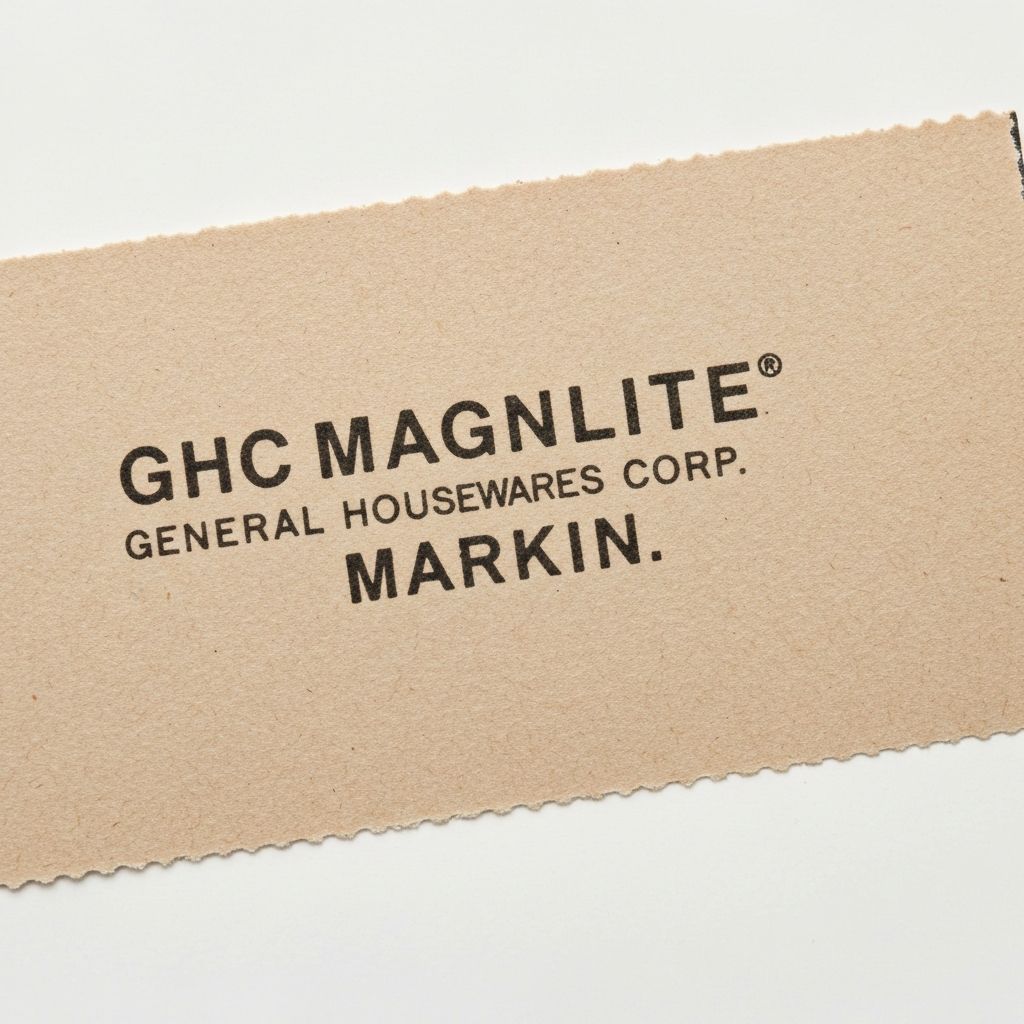
GHC Stamp
General Housewares Corporation marking, the most commonly found vintage Magnalite. Still USA-made through most production, excellent for daily use, and good value for collectors on a budget.
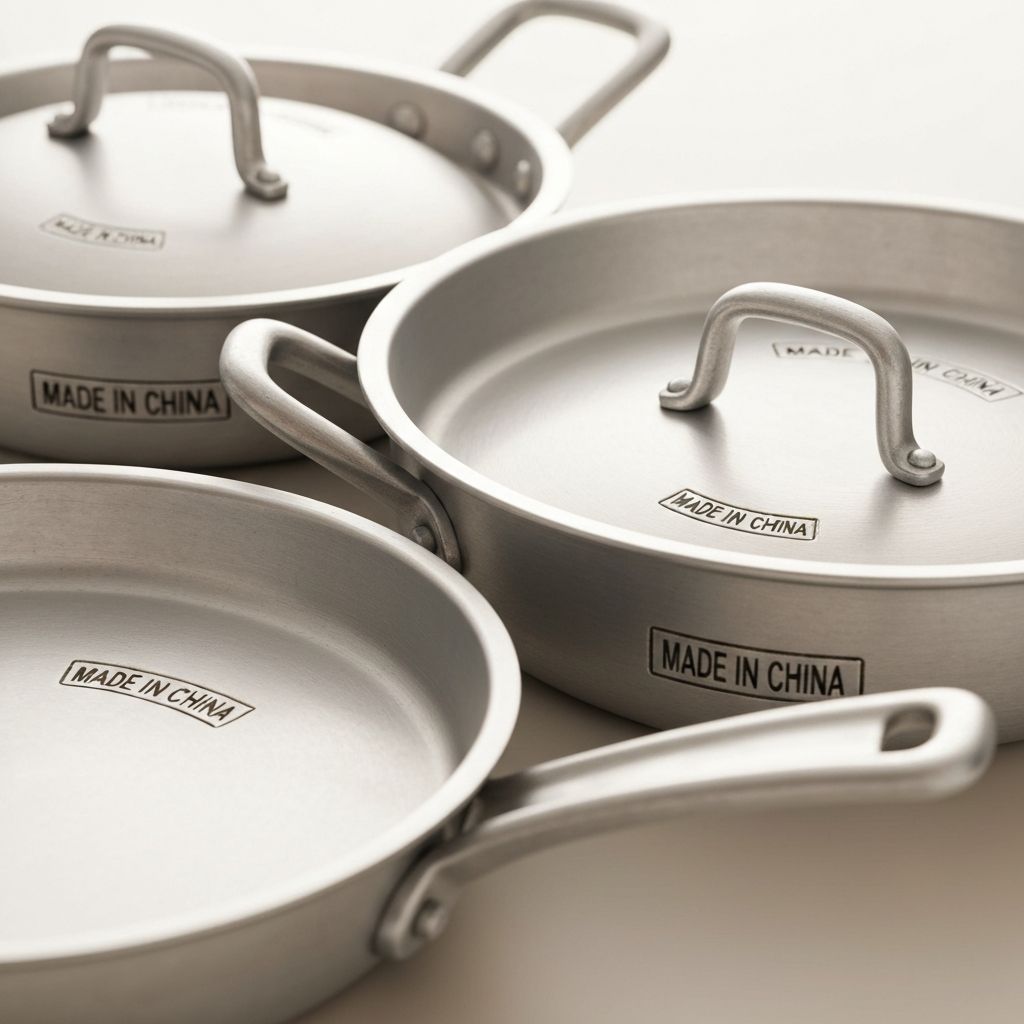
Made in China Markings
Modern imports, reproductions, or derivative products. These are NOT vintage Magnalite and have minimal collector value. Often sold under names like "McWare" or "Magnaware." Can be functional but not authentic.
How to Spot Fakes & Reproductions
Protect yourself from reproductions and misrepresented pieces. Learn the key differences between authentic vintage Magnalite and modern imports.
Authentic Vintage Magnalite
Weight & Heft
Vintage Magnalite is surprisingly heavy for aluminum. A 5-quart Dutch oven should feel substantial—around 5-7 pounds empty. The thick cast walls are what make it superior for heat retention.
Casting Quality
Smooth, precise castings with minimal tooling marks. Interior walls are nearly mirror-smooth. Seams and mold lines are tight and well-finished.
- • No rough patches or pitting in casting
- • Uniform wall thickness throughout
- • Crisp, clear stamped markings
Handle Construction
Handles are cast integrally with the body—not riveted on. The connection between handle and pot is seamless. Bakelite or wooden handles (on lids) are smoothly integrated with metal fittings that are solid and tight.
Finish Quality
Classic line has a bright, mirror-like finish when polished. Professional line has deep, even anodization in charcoal/grey. No blotchiness or uneven coloring.
Lid Fit
Lids fit with precision tolerances. They should sit flat, seal well, and have minimal wobble. The steam vent hole (if present) is cleanly drilled, not punched.
Fakes & Reproductions
Weight & Heft
Reproductions feel noticeably lighter—sometimes 30-40% less weight than authentic pieces. Thinner walls mean less heat retention and inferior cooking performance.
Casting Quality
Rough, unfinished castings with visible imperfections. Interior surfaces may have tooling marks, drag lines, or uneven texture.
- • Pitting, porosity, or rough spots in casting
- • Variable wall thickness (feel inside)
- • Blurry or poorly stamped markings
Handle Construction
Handles may be riveted or bolted on rather than cast as one piece. Look for visible fasteners or seams where handle meets body. Rivets are a red flag for reproductions.
Finish Quality
Finish is often dull, streaky, or uneven. May have blotchy areas where polishing or anodizing was inconsistent. Scratches easily or shows wear prematurely.
Lid Fit
Lids fit loosely or poorly with excessive wobble or gaps. May not seal properly for waterless cooking. Steam vents are roughly punched with sharp edges.
Additional Red Flags for Reproductions
Suspicious Names
Watch for "McWare," "Magnaware," "Magna-Lite" (with hyphen), or other derivative names. These are NOT authentic Magnalite brands.
Price Too Good
If a "Wagner Ware" piece is selling for $20-30, it's likely a fake. Authentic Wagner typically starts at $60-100+ depending on piece and condition.
Modern Packaging
New-in-box vintage Magnalite is extremely rare. If it's in shrink wrap with a modern UPC barcode, it's a reproduction.
Vintage Magnalite Value Guide
Approximate market values for different eras and conditions. Actual prices vary based on rarity, condition, and market demand. Last updated January 2026.
| Era / Manufacturer | Typical Piece (5qt Dutch Oven) | Rare Pieces | Condition Factor |
|---|---|---|---|
Wagner Ware (1934-1957) Especially with Sidney -O- | $150-300 Common pieces in good condition | $300-600+ Rare sizes, complete sets, mint | Mint: +50% Poor: -40% |
Textron Era (1957-1969) Still Wagner quality | $100-200 Good condition standard pieces | $200-400 Rare items, complete boxed sets | Mint: +40% Poor: -35% |
GHC Era (1969-1996) Most common vintage | $60-120 Standard pieces, good condition | $120-250 Professional line, rare sizes | Mint: +30% Poor: -30% |
American Culinary (1996-2014) USA-made only | $40-80 Functional user pieces | $80-150 Unused, rare items | New: +25% Poor: -40% |
Chinese Imports Modern reproductions | $15-40 Functional use only | $40-60 New with packaging | No collector value Buy for use |
Premium Value Factors
- • Complete sets with original boxes
- • Sidney -O- stamp present
- • Unusual sizes (mini, extra-large)
- • Professional line anodized pieces
- • Mint/unused condition
Market Trends
- • Wagner Ware: Steadily appreciating
- • GHC: Stable, good value buys
- • Oval roasters most sought-after
- • Southern US markets pay premium
- • Online prices 20-30% above local
Smart Buying Tips
- • Estate sales: best deals
- • Check thrift stores in Louisiana
- • Verify markings before buying online
- • Discolored pieces can be restored
- • Pay more for Wagner, it's worth it
How to Date Your Magnalite Cookware
Use these clues to determine the approximate age of your Magnalite pieces.
Check the Bottom Stamp
The manufacturer marking is your primary dating tool. Look on the bottom of the pot or underside of the lid.
- Sidney -O- or Wagner Ware = 1934-1957
- Textron or Wagner-Textron = 1957-1969
- GHC or General Housewares = 1969-1996
- American Culinary = 1996-2014
Examine Patent Numbers
Earlier pieces often show patent numbers (e.g., "Pat. 2,150,552"). These patents date to the 1930s-1940s and indicate Wagner Ware era production.
Look at Handle Style
Handle evolution can help narrow dating:
- Bakelite handles: Common in Wagner/early GHC era
- Wooden handles: Later GHC and American Culinary
- All-metal handles: Professional line (1980s+)
Check Finish Type
Classic (shiny/polished): All eras
Professional (dark anodized): GHC 1980s+ and later
Assess Weight and Quality
Generally, heavier = older = better. Wagner era pieces are noticeably heavier than later production due to thicker casting walls.
Frequently Asked Questions
Common questions about identifying, dating, and valuing Magnalite cookware.
Can I fix pitted aluminum on my Magnalite?
Unfortunately, pitting cannot be fully reversed. Pitting occurs when the aluminum reacts with acidic foods or harsh detergents (especially dishwasher phosphates), creating tiny holes in the surface.
You can minimize the appearance by thorough cleaning and polishing, but deep pits are permanent. Pitted pieces are still functional but have reduced value (typically 30-50% less than similar unpitted pieces).
Why did my Magnalite turn grey or dark?
Grey or dark discoloration is oxidation, which happens when aluminum reacts with air, water, and minerals. This is completely normal and does not affect cooking performance.
The good news: oxidation is easily reversible! Use a cream of tartar and vinegar boil (see our Care & Restoration Guide) to remove interior discoloration, and metal polish for the exterior.
Is Wagner Ware really that much better than GHC?
For cooking performance, both Wagner and GHC era Magnalite perform excellently. The differences are subtle—Wagner pieces are slightly thicker and heavier, with marginally better heat retention.
For collecting and value, yes—Wagner Ware commands 2-4x the price due to its history, craftsmanship, and scarcity. If you're buying for daily use, GHC offers outstanding value. If you're collecting or investing, Wagner is worth the premium.
How can I tell if a piece is really vintage or a Chinese reproduction?
Check these key indicators:
- Bottom marking: Look for Wagner, GHC, Textron, or "Made in USA"
- Weight: Vintage is significantly heavier
- Casting quality: Smooth interior vs. rough/pitted surface
- Handle construction: Integrated cast handles vs. riveted
If it says "Made in China" or has names like "McWare" or "Magnaware," it's a modern reproduction with no collector value.
What's the most valuable Magnalite piece?
The Wagner Ware Sidney -O- oval roaster (especially larger sizes) is among the most valuable. Complete vintage sets in original boxes with Sidney -O- stamps can command $400-800+.
Other valuable pieces include rare sizes (mini or extra-large), Professional line anodized pieces from the GHC era, and any mint-condition Wagner pieces with original packaging.
Should I use vintage Magnalite or keep it as a collectible?
This depends on rarity and condition. GHC-era pieces: Absolutely use them! They're plentiful, excellent performers, and using them won't diminish value significantly.
Wagner Ware pieces: If it's rare or mint condition, consider keeping it for collecting. However, these pots were made to be used, and gentle use won't destroy their value. Just avoid the dishwasher and harsh abrasives.
Where's the best place to buy authentic vintage Magnalite?
Best sources for deals:
- Estate sales: Especially in Louisiana, Mississippi, Alabama
- Thrift stores: Goodwill, Salvation Army in the Southern US
- Antique malls: Often have vintage Magnalite sections
- Online marketplaces: eBay, Etsy, Facebook Marketplace (verify markings first)
Always ask for photos of bottom markings before buying online, and be willing to pass on pieces that can't be authenticated.
Ready to Start Your Magnalite Collection?
Now that you know how to identify authentic vintage Magnalite, explore our available pieces or learn how to care for your cookware.